
May Newsletter—Spring Into Clean Air
Summer is right around the corner! On the bright side, that means sun, warmer weather, more beach days, and fruitful gardens. On the not so bright side… that also means the anticipation of more record-breaking heat waves, heightened risks of wildfires, and the resulting unhealthy air quality.
Luckily, our Kicking Gas program is helping 120+ homes install new heat pumps this year! In addition to significantly lowering your household’s carbon footprint and contributing to cleaner forms of energy use, heat pumps provide comfortable temperatures all year round and have built-in air filters so you’re breathing cleaner indoor air. We’re providing decarbonization subsidies of 20% - 75% off heat pump project costs (up to $10,000!) to help our communities transition from fossil fuels and wood burning to electric.

Our OPEN enrollment period will end on June 30th. If you’re wanting to be part of our Spring enrollment for Kicking Gas subsidies, be sure to get your process rolling before this period closes! Our Fall enrollment period will be from August 16th through December 15th, 2026.
Read about eligibility for our program HERE.
If you’ve already made the switch and are enjoying your heat pumps and/or electric stoves, please consider making a contribution to support our mission and others kick gas out of their homes!
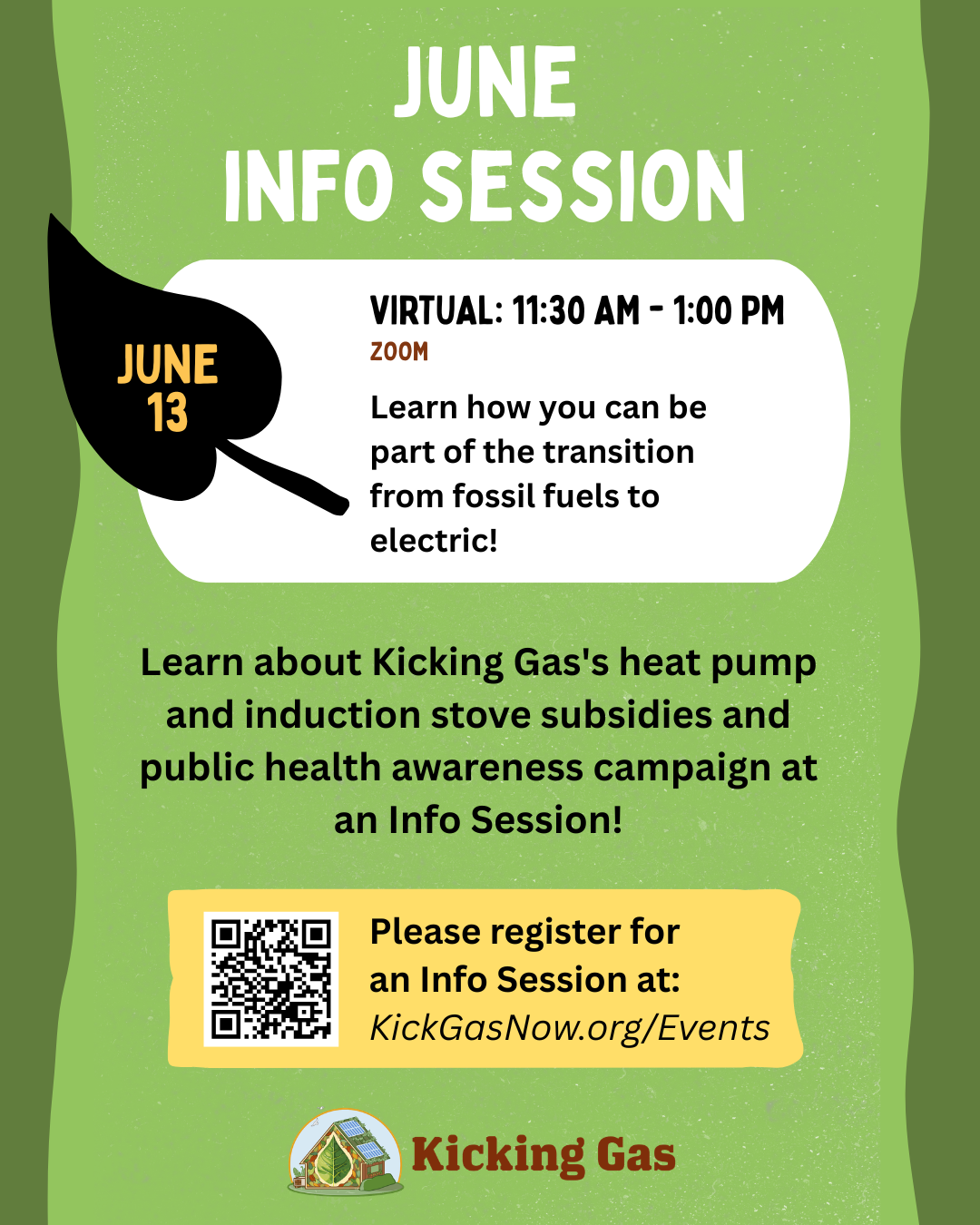
June 13th Info Session
Zoom/Online
11:30am - 1:00pm
Join us online at our June Info Session to learn about our financial incentives for heat pumps and induction stoves! During the Info Session, you’ll learn about the benefits of switching to electric including breathing cleaner air, reducing toxins, cutting carbon emissions, and saving money, while learning how and why these appliances make a difference! Invite your friends and family to attend too!
Register for our upcoming June Info Session HERE.
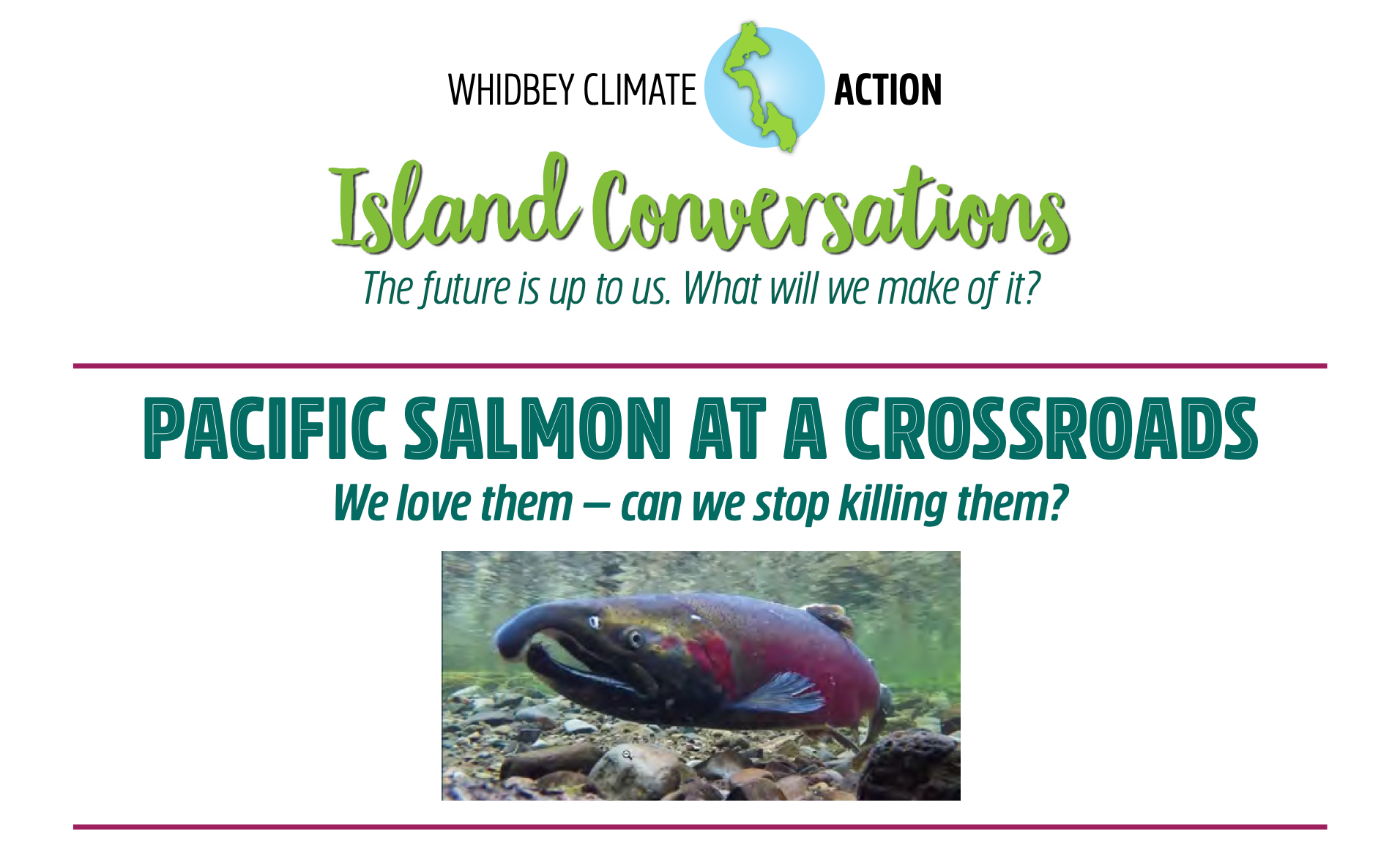
Island Conversations: Pacific Salmon at a Crossroads
Thursday,June 4th
5:45 PM
St. Hubert's in Langley
Join Whidbey Climate Action for this month’s Island Conversations about Pacific Salmon!
As Islanders deeply committed to preserving precious natural resources, you know how vital salmon are to our culture, our economy, and our local ecosystems. Undoubtedly, you also know that salmon are in peril.
Whidbey Climate Action’s Island Conversations guest, Amirah Casey, will dig into the connection between salmon and water quality, and explain actions we can each take to protect our waters and our salmon runs. Amirah Casey is a graduate student with deep knowledge of the interaction of stormwater runoff, salmon survival, climate change, and the “green infrastructure” solutions we need to restore our ecosystem.
Learn more HERE.
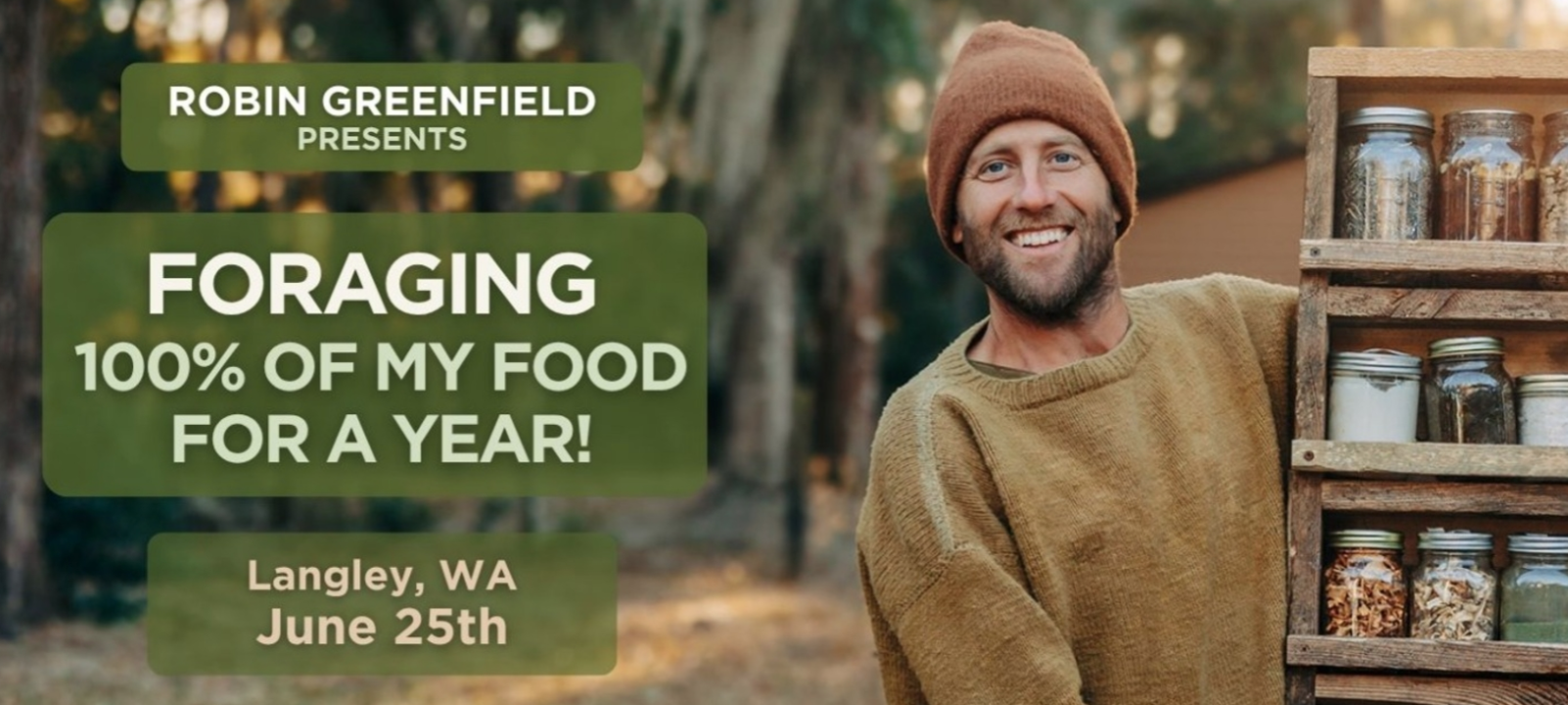
“Foraging 100% of my Food for a Year!” with Robin Greenfield
Thursday, June 25th
6:00 - 9:00 PM
rePurpose at The People’s House
724 Camano Ave, Langley
rePurpose invites you to hear activist Robin Greenfield speak at The People’s House!
Robin’s presentation, “Foraging 100% of my Food for a Year!,” will discuss his experience foraging all of his food and medicine for an entire year.
Learn how western humans can change their lifestyle to better live in reciprocity with the Earth. Bring your questions and curiosities and join in for this fun and informative event!
Register for this event here: https://community.robingreenfield.org/events/gratitude/2145006
Tickets are available by donation.
Learn more about this event and Robin Greenfield’s mission at robingreenfield.org/foragingyear
Good News Highlight! EVs are already making your air cleaner!
A recent study in California found that even small increases in EV (electric vehicle) adoption has led to measurable drops in neighborhood-level air pollution! The study focused on California, which has the highest rates of EV use in the country, and nitrogen dioxide, one of the gases released during combustion (including, especially, when fossil fuels are burned). Exposure to nitrogen dioxide pollution can contribute to heart and lung issues, or even premature death. The study analysis found that for every adoption of 200 electric vehicles, nitrogen dioxide emissions decreased by 1.1%! That may not sound like much, but it can make a significant difference!
Sandrah Eckel, lead author of the study, said that research like this underscores the importance of continued EV adoption and the need to do so equitably. Despite lower-income neighborhoods historically bearing the brunt of pollution from highways and traffic, they can’t always afford the relatively high costs of EVs.
“There are concerns that some of the communities that really stand to benefit the most from reductions in air pollution are also some of the communities that are really at risk of being left behind in the [clean energy] transition,” she said. She hopes that research like this can help guide policymakers.
Read an article about this study from Grist.
PSE Energy Bills Increase
As advocates for the “All Electric Home,” we wanted to again acknowledge Puget Sound Energy’s (PSE) increase in electricity rates. We know many of you may be concerned about the rising costs of electricity and we’re here to share what we know.
Unlike other local utility companies like SnoPUD and Seattle City Light, which are ~95% fossil fuel free, ~40% of PSE’s produced electricity is currently generated with “natural” gas.
Twenty percent of the world’s “natural” gas has historically been transported through the Strait of Hormuz. Propane is made by processing “natural” gas—so both fossil fuel costs have been drastically impacted by the same supply chain interruption we’ve all seen making the news headlines.
The good news is that:
1) If your home is currently heated by “natural” gas or propane, switching to electric still benefits your budget! The overall electric cost will still be lower than the cost of using fossil fuels combined with electric usage.
2) Washington State has some of the most aggressive climate policies in the nation. In 2019, former Governor Inslee signed the Clean Energy Transformation Act into law, which commits Washington to an electricity supply free of greenhouse gas emissions by 2045. In other words, PSE will need to stop using fossil fuels to create their electricity! Under state law, PSE must have 80% non-emitting resources by 2030 and 100% by 2045.
We encourage PSE customers to make comments to the UTC with your thoughts on the rate increases.